Final daily intelligence

What launched.
What matters.

Product Hunt's completed ranking, translated into practical signals for independent software builders.

27Featured launches
4,286 Votes
423 Comments
OfficialProduct Hunt rank
Ranking available without analysis.

Editorial analysis is unavailable for this edition. The official ranking below remains complete.

Source data + labeled analysis

Final daily ranking

02 / Products
#1

Kane CLI

Natural language browser & mobile app tests from terminal

Facts from Product Hunt446 votes55 comments
SaaSDeveloper ToolsArtificial Intelligence
AI-generated inferencemedium confidence

Kane CLI is an agentic quality verifier for developers and AI coding agents. It lets users describe a test in natural language, and Kane CLI runs it in a real Chrome browser, returning pass or fail with shareable proof, without requiring selectors. It is local-first and free to start.

Problem signal
Writing browser and mobile app tests typically requires writing complex selectors and maintaining brittle test scripts. Kane CLI appears to solve this by allowing natural language test descriptions that run in a real browser.
Indie angle
Kane CLI is positioned as a free-to-start, local-first developer tool with a natural language interface, which could appeal to indie developers seeking a low-friction testing solution. The agentic angle for AI coding agents also opens a niche in AI-assisted development workflows.

#2

Ito

AI code review that runs your code

Facts from Product Hunt418 votes46 comments
Developer ToolsArtificial IntelligenceGitHub
AI-generated inferencemedium confidence

Ito is an AI code review tool that runs the application in an ephemeral environment for every pull request, validates impacted flows, and provides runtime evidence to catch bugs that static analysis and model-only reviewers miss.

Problem signal
Static analysis and model-only AI code reviewers have to guess from diffs and often miss bugs that only appear at runtime. Teams lack visibility into what actually broke, where it happened, and why before a PR reaches production.
Indie angle
The tool addresses a niche in AI code review by adding runtime validation. Indie developers could potentially build lightweight versions of this for specific frameworks or offer integrations that focus on particular runtime issues, though this is inference from the product's approach.
#3

Nuphos

The AI-Native DevOps Workspace.

Facts from Product Hunt367 votes79 comments
APISaaSDeveloper Tools
AI-generated inferencemedium confidence

Nuphos is an AI-native DevOps workspace that gives engineering teams a shared environment where AI agents can learn infrastructure, investigate issues, and operate production systems.

Problem signal
Engineering teams need a way for AI agents to understand and operate on production infrastructure, which typically requires scattered context and manual investigation. Nuphos appears to solve this by providing a shared environment for AI agents to learn, investigate, and operate.
Indie angle
Potential opportunity for indie developers: Build specialized AI agents or focused DevOps tooling that integrates with existing infrastructure, since Nuphos demonstrates market interest with 367 votes and a daily rank of 3. Indie devs could target niche DevOps workflows or provide lighter-weight alternatives.
#4

Scrimba Explain

Ask any question, get a video back instantly

Facts from Product Hunt296 votes30 comments
ProductivityEducationVideo
AI-generated inferencemedium confidence

Scrimba Explain generates a narrated video tutorial instantly from almost any question. Users can upload files, add links, paste code, or describe what they want to understand. It uses DOM-based playback technology to be much faster than typical video generation models, and the video includes visual aids like images, code walkthroughs, animations, diagrams, plus voiceover, captions, and a cursor to feel more like YouTube than a chatbot.

Problem signal
Traditional chatbot explanations can feel abstract and text-heavy, while video generation models are slow. Scrimba Explain appears to solve this by turning questions, code, files, or links into immediate, narrated video walkthroughs with visual aids.
Indie angle
There may be an opportunity for indie developers to build fast, lightweight video-explainer tools for niche domains such as code learning, document explanation, or technical onboarding, using similar DOM-based or non-video-model approaches to avoid slow/expensive generation. The early momentum visible on Product Hunt (296 votes, daily rank 4) suggests market interest in instantly generated visual explanations.
#5

Human Behavior

Product analytics told you what happened. We handle it.

Facts from Product Hunt264 votes18 comments
AnalyticsDeveloper ToolsArtificial Intelligence
AI-generated inferencemedium confidence

Human Behavior is a product analytics tool that goes beyond dashboards by using AI to watch session replays, detect user frustration signals like rage clicks and dead buttons, and automatically take action such as emailing customers, updating Linear and CRM systems, or opening pull requests with replay evidence. It delivers insights and actions through Slack or SMS instead of a dashboard.

Problem signal
Traditional product analytics only tells you what happened, but the insights often die in dashboards because no one acts on them. Teams need a way to close the loop by automatically understanding user behavior and taking corrective action without manual monitoring.
Indie angle
There is an opportunity for indie developers to build AI-powered agents that not only analyze product behavior but also take action autonomously. The 'close the loop' approach could be applied to niche verticals or integrated with popular dev tools, making analytics more actionable and reducing dashboard fatigue.
#6

Oasis

Where humans and agents come to work.

Facts from Product Hunt233 votes22 comments
ProductivityArtificial IntelligenceNo-Code
AI-generated inferencemedium confidence

Oasis is an intelligent workspace that brings together humans, AI agents, and team members into one shared environment. It aggregates agents from across the ecosystem so people and agents work as equal teammates, with all conversations, decisions, and artifacts accumulating as shared knowledge that compounds over time. The workspace adapts to how you work and builds specialized tools to help the team perform better.

Problem signal
It appears to solve the problem of fragmented AI agent usage and poor knowledge retention across teams. Without a shared workspace, conversations and decisions involving agents are scattered, and organizational knowledge fails to compound. Teams also lack a unified place where different agents can collaborate with humans as equals.
Indie angle
Potential opportunity for indie developers to build niche agent-integration plugins, specialized workspace templates for verticals, or lightweight no-code agent orchestration tools that plug into such a workspace. The focus on 'bringing the best agents from across the ecosystem' suggests an ecosystem play where indie developers could create specialized agents or connectors.
#7

Skilldocs

Figma for markdown

Facts from Product Hunt188 votes13 comments
ProductivityDeveloper ToolsArtificial Intelligence
AI-generated inferencemedium confidence

Skilldocs is a collaborative markdown editor, described as 'Figma for markdown,' that allows multiple users to edit a skill document simultaneously with real-time cursors and inline comments, and then hand the entire conversation and diff back to an AI agent. It was featured on Product Hunt on 2026-08-13, received 188 votes and 13 comments, and ranked #7 that day.

Problem signal
It appears to solve the problem of collaboratively developing or refining AI 'skills' (likely instructions or prompts for agents) in a real-time, visual markdown environment, while preserving the edit history (conversation + diff) for direct handoff to an agent. Without it, teams may need to use separate tools for collaborative editing and agent integration.
Indie angle
The Product Hunt stats (188 votes, #7 daily rank) suggest early interest in AI-agent skill collaboration. An indie developer could build a similar focused tool using existing collaborative editing libraries, or extend this idea to a narrower workflow (e.g., specific agent frameworks). The niche is still emerging, so there may be room for specialized implementations.
#8

Caveman

why use many token when few do trick

Facts from Product Hunt157 votes9 comments
Open SourceDeveloper ToolsArtificial IntelligenceGitHub
AI-generated inferencemedium confidence

Caveman is a developer tool that wraps AI coding agents such as Claude Code, Codex, and Hermes with a local proxy. It compresses logs, tool output, and files before every provider call to reduce token usage. The maker reports a pinned 54-run benchmark showing 33.2% fewer input tokens while passing 18/18 correctness checks, and claims it can run existing agent skills with ~70% fewer tokens by loading text as images.

Problem signal
AI coding agents consume large numbers of input tokens because logs, tool output, and files are sent to providers without compression. This likely increases cost and may slow down or limit agent workflows.
Indie angle
There is a potential opportunity for indie developers to build token-saving utilities and proxy integrations around AI coding agents. The product's cross-agent approach and open-source connection suggest room for specialized tools that optimize agent context, compress output, or benchmark token savings. However, specific revenue or traction data beyond Product Hunt votes is not supplied.
#9

Kitbitz

2K+ free hand-drawn illustrations for your projects, CC0

Facts from Product Hunt142 votes15 comments
GamesGraphics & DesignIllustration
AI-generated inferencemedium confidence

Kitbitz is a free CC0 library of 2,000+ hand-drawn illustrations across 13 themed kits, available as individual SVG/PNG downloads and as Figma Community libraries with reusable components and color variables.

Problem signal
It appears to solve the problem of finding a large set of freely usable, hand-drawn illustration assets that can be used without licensing restrictions (CC0) in various projects like games, apps, and maps.
Indie angle
Indie developers can use the free CC0 assets to build games, apps, and other projects without paying for or licensing illustrations. The makers are also building tools (Figma plugin, MCP support, world-building) around the library, which may create opportunities for integration or extension.
#10

Mem Agent

The AI that refuses to let you drop the ball

Facts from Product Hunt127 votes4 comments
ProductivityTask ManagementArtificial Intelligence
AI-generated inferencemedium confidence

Mem Agent is an AI-powered productivity and task management tool that tracks information you save, extracts todos from notes and meetings, and proactively follows up so commitments don't slip. It also includes a Push-to-Remember feature to quickly capture or recall thoughts without leaving your workflow.

Problem signal
People often forget important tasks or commitments buried inside notes, meetings, or casual mentions. The tool appears to solve the problem of follow-through by automatically capturing and surfacing those obligations.
Indie angle
There is room for indie developers to build niche AI assistants that focus on proactive task follow-up, especially by integrating with existing note-taking or meeting tools. The use of AI APIs could allow small teams to replicate core features and target specific workflows.
#11


FluidDocs CLI

Publish interactive docs that answer and report back

Facts from Product Hunt121 votes14 comments
Design ToolsProductivityArtificial Intelligence
AI-generated inferencemedium confidence

FluidDocs CLI is a command-line tool that lets users publish interactive documents from prompts. The documents can answer viewer questions and report back analytics such as who opened them, how far they got, and what they asked. It supports pitch decks, proposals, reports, and board updates, with one-line CLI installation and one-command publishing. Documents can be edited later by prompt, and the same link updates. Viewer-side AI-enabled Q&A and analytics are built in.

Problem signal
Static documents do not engage readers or provide feedback. This appears to solve the problem of creators not knowing whether viewers actually read their content or what questions they have. It also reduces the friction of updating documents by allowing edits through prompts rather than manual redesign.
Indie angle
A CLI-first, prompt-driven document publishing tool with built-in AI Q&A and analytics is a feasible indie developer opportunity because it can be built on existing LLM APIs, a publishing endpoint, and a lightweight web viewer. The one-line install and one-command publish flow also keeps the product scope narrow enough for a small team.
#12

WebBrain

The sidebar agent for the rest of us

Facts from Product Hunt120 votes9 comments
Browser ExtensionsChrome ExtensionsArtificial IntelligenceGitHub
AI-generated inferencemedium confidence

WebBrain is a free, open-source AI browser agent that runs as a sidebar extension for Chromium browsers and Firefox. It can run locally with llama.cpp for zero-cost queries where data stays on-device, or use a user-provided API key for cloud providers like OpenAI, Claude, OpenRouter, or 100+ OpenAI-compatible providers. It reads pages, extracts data, and automates tasks, with a multilingual UI and token-conscious screenshots. It is MIT licensed.

Problem signal
It appears to solve the problem of using AI assistants directly within a browser context without requiring cloud subscription costs or sending private browsing data to third-party servers. It also addresses the friction of copying content between browser tabs and AI chat tools.
Indie angle
The open-source MIT license and minimal cost structure (local inference or bring-your-own-key) allow an indie developer to build a community around a privacy-first browser AI agent without significant infrastructure costs. The multi-provider support lowers user lock-in risk, and the focus on sidebar UX addresses a niche in the browser extension space.
#13

Google Pixel 11

Your most personal Pixel yet

Facts from Product Hunt118 votes1 comments
AndroidHardwareCell Phone
AI-generated inferencelow confidence

Google Pixel 11 is a lineup of Android smartphones featuring updated camera hardware, the Tensor G6 chip, LED HiLight notifications, and faster Gemini AI support.

Problem signal
It appears to solve the need for more personalized and capable Pixel smartphones with improved hardware, notifications, and AI performance.
Indie angle
Because this is a large-scale hardware product from Google, direct indie competition is unlikely, but indie developers could build accessories, apps, or integrations around features like LED HiLight notifications or Gemini AI support.
#14

Execlave

The gate between your AI agents and the real world

Facts from Product Hunt116 votes20 comments
Developer ToolsArtificial IntelligenceSecurity
AI-generated inferencemedium confidence

Execlave is an AI Agent Governance and Enforcement platform (runtime AMP) that sits between autonomous agents and real systems, enforcing policy before every action. It provides runtime policy enforcement, kill switches, and audit-ready trails for platform and security teams, aiming to make every agent action authorized, traceable, and compliant with frameworks like SOC 2, EU AI Act, and ISO 27001. It launched on Product Hunt with 116 votes, 20 comments, and daily rank 14.

Problem signal
Autonomous AI agents can take actions in real systems without consistent oversight, creating security, compliance, and governance risks. Existing approaches often detect incidents after they happen rather than enforcing policy before each action.
Indie angle
AI agent governance is an emerging niche, and a focused runtime enforcement tool could plausibly be built by a small team, especially given its Developer Tools, Artificial Intelligence, and Security positioning. The Product Hunt launch shows early interest (116 votes, 20 comments, daily rank 14), suggesting room for independent builders to explore specialized governance products for autonomous agents.
#15

Coarena by Coasty

The arena where agents battle on real-world work

Facts from Product Hunt107 votes40 comments
AnalyticsTechData
AI-generated inferencemedium confidence

Coarena is a platform where AI agents compete against each other on real computer tasks, allowing viewers to watch multiple models complete the same workflow side by side, compare speed, accuracy, and reliability, and vote for the winner.

Problem signal
It appears to address the difficulty of evaluating AI agents on real-world work rather than synthetic benchmarks, helping people discover which agent actually performs best on everyday tasks.
Indie angle
A potential opportunity for indie developers is to build niche agent-evaluation tools or community platforms that focus on real-world, visible comparisons, especially if they can target specific enterprise workflows or underserved agent categories.
#16

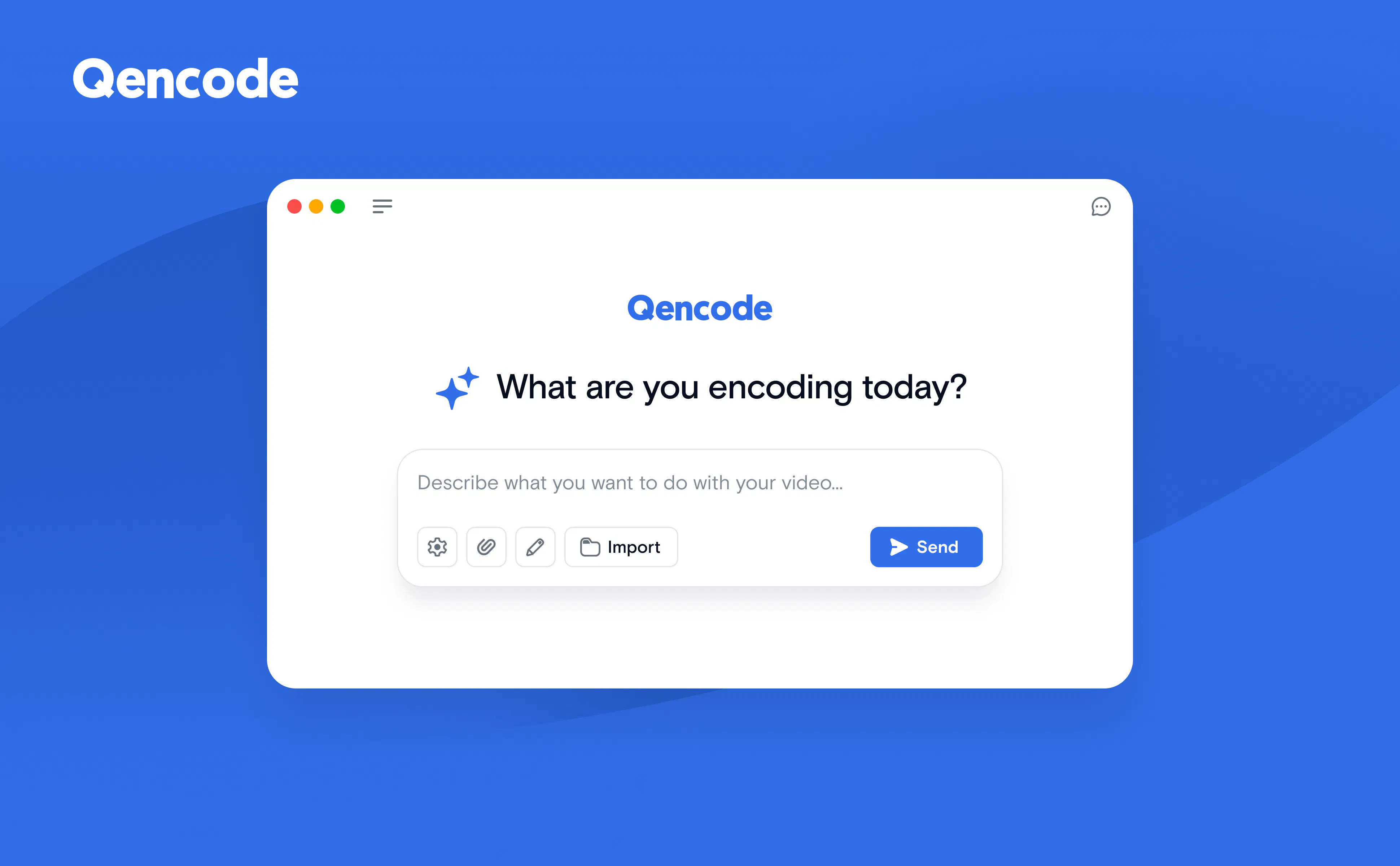
Qencode MCP

Let AI agents transcode and process video

Facts from Product Hunt105 votes4 comments
Streaming ServicesDeveloper ToolsArtificial Intelligence
AI-generated inferencemedium confidence

Qencode MCP is a developer tool that lets AI agents transcode, analyze, edit, optimize, and deliver video using natural language, powered by a cloud video processing platform.

Problem signal
Video processing typically requires complex APIs or manual workflows, and AI agents lack a native way to perform video operations. Qencode MCP appears to bridge AI assistants with cloud video processing so users can handle video tasks through natural language.
Indie angle
Indie developers could build similar natural-language bridges to other cloud media services, or create niche MCP servers for specialized video workflows. There may also be room to build vertical AI-agent tools that wrap Qencode APIs for specific content niches.
#17

Insta360 X6

A 360 camera, gimbal, and 3D scanner in one

Facts from Product Hunt100 votes2 comments
HardwarePhotographyVideo cameras
AI-generated inferencemedium confidence

Insta360 X6 is a flagship 8K 360 camera with dual 1/1.1" Sony sensors, capable of 8K50 video, 10-bit color, 140 minutes of 8K30 recording, and built-in storage. It also combines a gimbal and 3D scanner into one device, and uses a new PanoMind model and AI Director to automatically find highlights, choose angles, and turn 360 footage into ready-to-share clips.

Problem signal
The problem it appears to solve is the friction of shooting, stabilizing, and editing 360-degree video. Traditionally, creators need separate gimbal hardware and manual editing workflows to find the best angles in 360 footage. The X6 combines these roles into one device and uses AI to automate highlight selection and clip creation.
Indie angle
Since the product is primarily hardware with built-in AI editing, there may be an opportunity for indie developers to build compatible software for further editing, exporting to different social platforms, or specialized workflows around 3D scan data. However, the supplied facts contain no API, plugin ecosystem, or developer documentation, so this remains an open possibility rather than a proven opportunity.
#18

Kin Health

Record doctor visits and get clear summaries

Facts from Product Hunt95 votes2 comments
Health & FitnessNotesArtificial Intelligence
AI-generated inferencemedium confidence

Kin Health is an AI-powered app that helps patients prepare for doctor visits, records the conversation, and generates a focused summary of key points, recommendations, and next steps after each appointment.

Problem signal
Patients struggle to remember everything discussed during healthcare appointments, often feeling the need to take notes instead of staying present, and later forgetting important details or follow-up actions.
Indie angle
There is a potential opportunity for indie developers to build AI-powered health note-taking tools that focus on summarization and patient clarity, especially as AI APIs improve and demand for patient-centered health tools grows.
#19

Patience

The only mechanic is waiting. The only currency is time.

Facts from Product Hunt92 votes5 comments
ProductivityTechGames
AI-generated inferencemedium confidence

Patience is a minimalist iOS game where the only mechanic is waiting for a circle to appear on a black screen after an unpredictable delay, then tapping it in time or restarting from Level 1. It includes a global leaderboard and a particle visualization made from every 100ms spent waiting.

Problem signal
It addresses the challenge of engaging players through pure anticipation and delayed gratification, turning idle waiting time into a game-like test of focus and reaction.
Indie angle
A single indie developer can create and launch a hyper-minimalist game with a strong conceptual hook, using a global leaderboard and visual feedback to build community and engagement without needing large teams or budgets.
#20

Dishylink

Open-source Starlink monitoring app for Mac, Windows and Web

Facts from Product Hunt91 votes5 comments
Chrome ExtensionsProductivityUser ExperienceGitHubTech
AI-generated inferencehigh confidence

Dishylink is a free, open-source desktop and web app that monitors Starlink dish and router stats, replacing the discontinued Starlink web portal by reading local network data.

Problem signal
Starlink's official app is phone-only, and the old web portal was switched off in 2024 with no replacement, leaving users without a desktop or browser-based way to monitor their Starlink equipment.
Indie angle
An indie developer can build a niche open-source tool around a popular hardware ecosystem, gaining traction via GitHub and Product Hunt (91 votes, daily rank 20). Possible opportunities include offering paid support, hosting a web version, or using this as a template for local-network device monitors.
#21

apra-fleet

Run a fleet of AI agents across your machines

Facts from Product Hunt88 votes3 comments
Open SourceDeveloper ToolsArtificial IntelligenceGitHub
AI-generated inferencemedium confidence

Observed from tagline and description: apra-fleet is an open-source MCP server that turns machines you already own into a fleet of AI agents. It mixes multiple AI models (Claude, Antigravity, Codex, Copilot, and local models via OpenCode), routes work by cost tier, runs durable multi-hour observable workflows, and builds itself autonomously.

Problem signal
Observed: The description implies that running multiple AI agents across different models and machines requires cost-based routing, durability, and observability. Inferred: It addresses the problem of coordinating and scaling AI agent workloads across existing hardware while managing costs and monitoring long-run workflows.
Indie angle
Observed: It is an open-source project with multiple makers and is featured under Open Source and Developer Tools. Inferred: Indie developers can contribute to or fork the project, build complementary plugins and integrations, offer managed or hosted versions, or create specialized cost-optimization and observability tools around the MCP server.
#22

AIO.GEO Protocol

Audit AI search structure. Dry run fixes. Receipts.

Facts from Product Hunt87 votes13 comments
Open SourceSEODeveloper ToolsGitHub
AI-generated inferencemedium confidence

AIO.GEO Protocol is a developer-focused, open-source tool that audits a website's structure for AI search discoverability, lets users simulate 'dry run' fix packs, re-scores the results, and seals the audit/fix output with HMAC receipts. It frames itself as an 'AI Search Readiness' protocol, contrasting traditional SEO for human search with GEO for AI agents.

Problem signal
As AI assistants and agents increasingly answer queries and take actions online, standard SEO may not prove whether a site is understandable or usable by AI agents. Site owners and developers need a way to measure AI search structure, test the impact of fixes before deploying them, and have verifiable proof of what was changed.
Indie angle
There is a potential early-mover opportunity for indie developers to build adjacent tools in the emerging 'AI search readiness' space: lightweight audit scripts, CMS plugins, or CI/CD checks that measure machine/agent accessibility. Since the topic is still niche and the product is open-source, an indie developer could contribute or fork the protocol, or create simpler paid versions for non-technical site owners.
#23

Kivicube

Create AR experiences with AI, no code required!

Facts from Product Hunt85 votes1 comments
SaaSAugmented RealityARKit
AI-generated inferencemedium confidence

Kivicube is a no-code platform that lets users create WebAR experiences using AI and natural language prompts, alongside a visual editor for manual control, templates, and custom assets.

Problem signal
Building AR experiences typically requires coding and technical expertise, which is a barrier for creators, marketers, and non-developers who want to produce interactive AR content quickly.
Indie angle
Independent developers could build complementary tools, templates, or asset libraries for Kivicube's platform, or leverage its AI-driven workflow to create niche AR experiences for specific industries without needing deep AR coding skills.
#24

Chiplab

Test firmware on a virtual chip with no hardware needed

Facts from Product Hunt85 votes3 comments
APIDeveloper ToolsArtificial Intelligence
AI-generated inferencemedium confidence

Chiplab is a beta developer tool that lets AI coding agents build, run, and test embedded firmware on a virtual copy of real chips (currently STM32 and Nordic) without physical hardware, by connecting via MCP to agents like Cursor, Claude Code, and VS Code.

Problem signal
Embedded software development typically requires physical boards; this slows down AI coding agents and introduces hardware bottlenecks. Chiplab removes the need for hardware by providing a virtual chip that can compile, run, and debug firmware.
Indie angle
There is room for indie developers to build MCP-connected virtual-hardware tools for other chip families, or to complement Chiplab with niche debugging/board-specific tooling. Its beta status and small maker footprint suggest an indie-friendly space.
#25

Phinq

Stops AI agents before they break something

Facts from Product Hunt85 votes6 comments
Open SourceDeveloper ToolsArtificial IntelligenceGitHub
AI-generated inferencemedium confidence

Phinq is an open source runtime governance layer for AI agents that intercepts tool calls, classifies them by risk, allows safe actions, holds irreversible actions for human approval, and writes every decision to a tamper-evident hash-chained audit log.

Problem signal
AI agents can perform irreversible or harmful actions autonomously, and developers currently lack a built-in way to govern those tool calls and maintain a trustworthy audit trail.
Indie angle
Because Phinq is open source and focused on a specific agent-governance niche, an indie developer could contribute, fork, or build complementary tooling around it, though the space may also attract larger security vendors.
#26

Pickle Browser

Browser for your agent. Runs local in a window you can see

Facts from Product Hunt85 votes1 comments
Developer ToolsArtificial Intelligence
AI-generated inferencemedium confidence

Pickle Browser is a local, visible browser for AI agents that lets users watch agent web browsing in real time, uses real logins, gates and logs every action, and compresses pages to reduce token usage by 32x. It integrates with Claude Desktop, Cursor, VS Code, and Codex CLI.

Problem signal
AI agents often browse the web invisibly or in the cloud, which can raise security concerns, require separate logins, and incur high token costs. Pickle addresses this by running locally with visible actions, policy-gated logging, and page compression to lower token use.
Indie angle
There is an indie opportunity in building local-first AI browser tools that emphasize transparency, security, and token cost reduction. Integration with existing developer workflows and a visible UI can attract a niche audience of AI power users and builders.
#27

ThreadPort

Move AI chats between ChatGPT, Claude & Gemini in one click

Facts from Product Hunt68 votes3 comments
Chrome ExtensionsProductivityArtificial IntelligenceGitHub
AI-generated inferencemedium confidence

ThreadPort is a Chrome/Edge extension that lets users move an active AI chat thread from one AI assistant (ChatGPT, Claude, or Gemini) to another with a single click, preserving full context. It requires no server or account, is EU-compatible, and offers a free tier of 10 transfers per month.

Problem signal
Conversations are locked into whichever AI assistant they were started in, forcing users to manually copy-paste or restart context when they want to switch tools for a different task or better output.
Indie angle
The product is a focused Chrome/Edge extension built by an individual maker (Juan Carlos Rampoldi), with clear positioning and a freemium pricing model. For independent developers, this shows a viable niche in AI interoperability tools that can be built as a lightweight browser extension without backend infrastructure, and monetized via subscription or usage-based free tiers.